Title: Wall Press – Posterior Chain Reset
Subtitle: A Stroke Survivor’s Guide to Unlocking the Posterior Chain
Description: This video documents a simple isometric exercise—the wall press—that has helped me unlock chronic tension in my posterior chain, reduce DOMS (Delayed Onset Muscle Soreness), and begin the slow process of redrawing my body map after a severe hemorrhagic stroke.
The wall press is not a cure. It is a tool. It is a skill. And like any skill, it improves with practice, patience, and perseverance.
The exercise targets the Golgi Tendon Organ (GTO)—a proprioceptor that lives in your tendon and measures tension, not stretch. When tension gets too high, the GTO triggers an automatic shutdown called autogenic inhibition, which relaxes the muscle before the tendon tears. This is the “emergency brake” that I have learned to access through daily practice.
After my stroke, muscle spindles—which detect stretch and say “contract!”—were dominating on my right side. This led to a 48-hour on/off cycle of DOMS that lasted for three years. I had to find a way to fire the GTO to rebalance the system. The wall press is that way.
I also explain how Pacinian corpuscles (vibration sensors) help prime the sensory pathway before the press, and how Ruffini receptors (which detect sustained pressure and shear) reinforce the release by telling the brain that the new position is safe. The superficial back line—a continuous fascial chain from the toes to the brow—means that unlocking the calf releases tension all the way up through the hamstrings, glutes, and lower back.
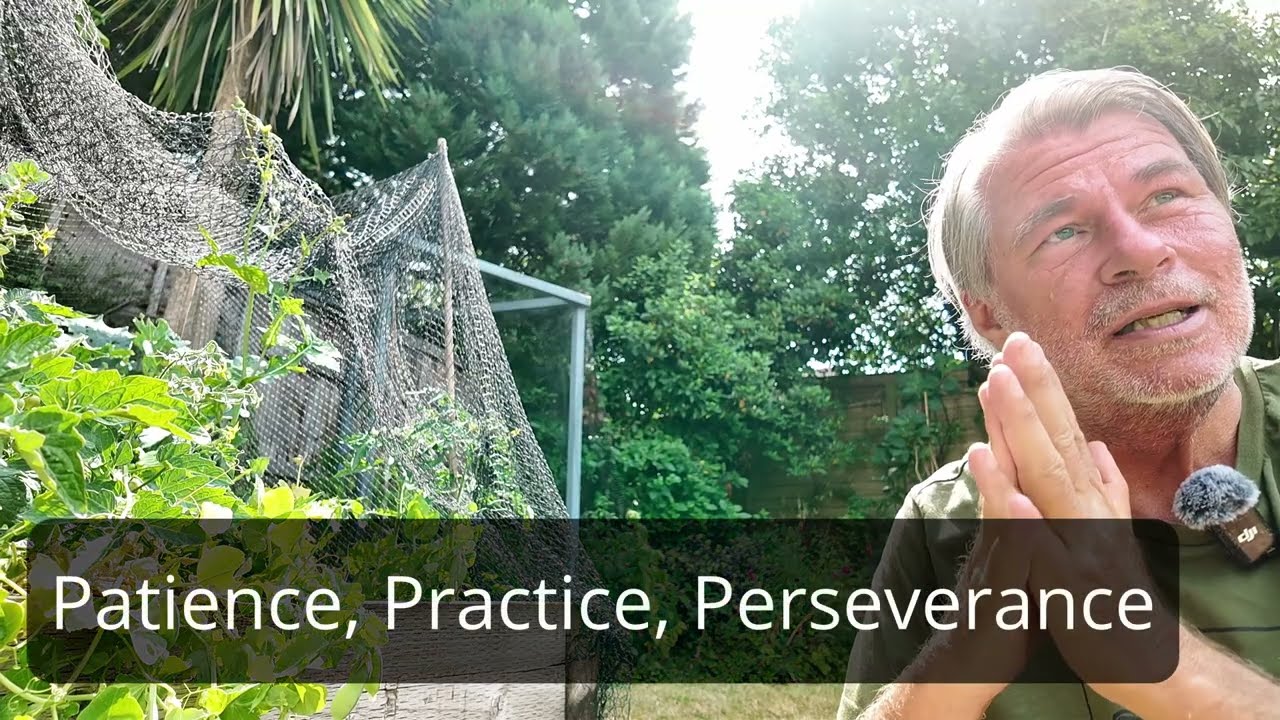
The video covers bilateral facilitation (the strong signal from my left foot “carrying” the weak signal from my right), the importance of pressing with the ball of the foot to load the Achilles tendon correctly, and the 3Ps: Patience, Practice, Perseverance.
I think uou mentioned this exercise on a post the other day. It is on my list to try as I feel it will help with my foot drop issues. Great info again.
That’s right, Ann… from trying to help someone with night cramps to helping my own chronic locked glute, this helps everything along the fascial superficial back line, including your foot problems. I had already checked that it is relevant for you !
It would be great to see Ann and Bobbi benefiting from this tip from Roland.
I do have a good feeling about this - it is practical, something that doesn’t need any medication or third party involvement but a partner may help?
A wall is all you need and you’ve got Roland to consult as you go.
I shall look forward to updates on this from y’all.
Maybe you can even reward yourselves with sugar snaps after you’ve done the exercises
Wonderful and inspiring. Go for it I say, go for it
Thank you @ManjiB you’re always so encouraging.. Just bear in mind that this was posted as a solution to a problem that has plagued me for over three years. While it does address anything along the superficial back line SBL, I believe we must find our own solutions Tailor made to address our own specific problems. But anyway here’s how it might help foot drop:
Foot drop after a stroke is primarily caused by weakness in the muscles that lift the front of the foot (the tibialis anterior). However, this weakness often exists alongside excessive tightness in the calf muscles (gastrocnemius and soleus), which pull the foot downwards (plantarflexion). This tightness can make it even harder to lift the foot.
My wall press specifically addresses this problem through its effect on the Superficial Back Line (the fascial chain from your foot up to your back). The exercise I developed does three crucial things:
It addresses the tightness: By loading the Achilles tendon, the wall press triggers the Golgi Tendon Organ (GTO) reflex, releasing tension in the calf muscles. This is like “un-sticking” the foot, making it easier for the weakened front muscles to lift it.
It retrains the nervous system: My wall press is a precise tool for “redrawing your body map” and rebalancing the muscle spindles and GTOs. This helps correct the nervous system’s over-command for the calf to contract.
It provides a safe, foundational strength exercise: In standard physiotherapy, isometric exercises like the wall press are the first and most important step for regaining strength at a joint. I am already using this principle perfectly
but beware there is plenty that this exercise does not address… & it’s only one exercise. I believe though that by understanding it one can learn the principles and the mechanisms that help to unlock your SBL.
A comprehensive routine for foot drop should include:
Active dorsiflexion exercises: Sitting or lying, actively pulling your toes up towards your knee. You can use a towel for resistance.
Sensory stimulation: Rolling your foot over a textured ball or bottle to stimulate the nerve endings and improve feedback.
Stretching: Following the isometric release with a gentle stretch of the calf, keeping your heel on the ground while slightly leaning forward.
Functional practice: Using the new strength and mobility in walking or standing exercises.
The Takeaway
Your wall press is a fantastic tool. By releasing the calf and resetting the neural balance, it removes the primary obstacle to lifting the foot. To truly conquer foot drop, you need to follow the wall press with exercises that “teach” the tibialis anterior to contract.
I am fully aware that the information you share is very unique and dare I say it possibly not suitable for many reading your posts. By saying this, I don’t mean to demean, offend or belittle anyone.
I find your posts and experiences are what in the old days used to be called leading edge or cutting edge - I’m afraid I haven’t moved with the times and so I don’t know what the current terminology is.
I personally find what you post very interesting and like to think it is the sort of thing I would do if I could. It is not for everyone and you do things that many may simply not be able to do for any number of reasons including lack of know how, access to expertise, resources etc.
In my view, you as a stroke survivor are at one extreme of the scale where you like to/are able to push boundaries, have no limits - I remember the 110% post-stroke recovery we discussed a while back. There aren’t many I have come across would even contemplate doing what you are doing and that may no be for the wont of trying but down to constraints and lack of access. Your team that you often talk about - that is a “luxury” not available to others.
I find you a bit of a “freak” and I know you will understand what I mean by this - you are a one-off and I know you don’t accept this as you have said on more than one occasion you are “just a human bean”, but we’ll just have to agree to disagree on that one.
I must also say or repeat something I have said before which is I don’t always follow/understand what you are saying because you go into so much [technical/specialist] detail that my [tiny] little brain simply gets overload. I don’t have you extreme high IQ and mental capacity and so do have to admit defeat when trying to follow all the stuff you put out. But I always enjoy what you do and I find it inspiring. In some ways, you might say I see you as a role model of sorts. I like the way [as I see it] you are continuously pushing the boundaries. Role model or maybe the Mad Professor (no offence to Mad Professors )
I respect and admire your tireless and what I consider as selfless efforts to impart the wisdom you have acquired.
Finally, what I always have to remind myself of is that "This works/worked for Roland/Ronald but it may not necessarily work for you, but that does not mean you should not try. After all we don’t all have a Ronald for our Roland.
I know it’s still a work in progress but when it is published, I expect it will be one heck of a read - your story that is
I appreciate your honesty, and I take responsibility for any confusion. If my posts feel dense or hard to follow, that’s on me. My aim is accessibility, and I’m still learning how to translate complex science into plain language for anyone, stroke survivor or not.
But some concepts resist simplification. Certain books I’ve read aren’t graspable unless you’re an atomic physicist. And occasionally, I’ll post something for the pros, like a clip on clearing iron from the body using pathways even decentralized science hasn’t mapped yet. That one’s for the nerds.
Still, my core identity is communicator and educator. When I use a word like “deafferent,” I do it deliberately, not to impress, but to give you a term you can look up and own. That’s why my second book, “Electrons from Earth,” is written for a 10-to-12-year-old audience. Because if a clever kid can get it, so can anyone. And trust me, there are some very clever kids out there. So yes, I’m a work in progress as a writer. But I’m committed to making the complex compelling, and the inaccessible, accessible, one video, one post, one page at a time.
I find the above a bit disconcerting (and I am saying this to impress )
I am not sure if disconcerting is the right word, but I guess that’s what I get for trying to impress!
I guess I am wondering how it is you ascertained that the book titled “Electrons from Earth” should be targeted at an audience of 10-12 year olds. I don’t know that many 10-12 year olds but I find myself which 10-12 year would want to read such a book.
That then leads me to the next part of the quoted text.
“Because if a clever kid can get it, so can anyone.” I find this worthy of comment or observation. Unless I misunderstand this, the implication is that 10-12 year old kids are clever or kids outside this age band are not clever, both of which I would certainly dispute and would find worrying or discriminatory .
I fully accept there are many clever kids out there and most if not all [clever] kids will certainly be cleverer than me for sure! And for that reason, I am not that concerned if I am unable to follow all the stuff that is aimed at the clever kids or that which is designed to challenge me and make me think. Perhaps as an old dawg, I may be too old to learn new tricks
This I can applaud and commend.
Keep up the good work
Let me clarify: when I said the book is written for a 10-to-12-year-old, I meant it as a benchmark for clarity, not a statement about intelligence or age groups. In my experience, that age range is wonderfully curious and unafraid to ask “why?”—and if I can explain something clearly enough for a bright 10-year-old to grasp, then I know I’ve done my job as a communicator.
The goal is simply this: to strip away unnecessary jargon and make complex ideas—like earthing, electrons, and the science of recovery—feel tangible and inviting. Not because adults can’t understand, but because everyone benefits from clarity. I want the book to be a bridge, not a barrier.
I’m glad the final line resonated with you. That commitment—to making the complex compelling and the inaccessible accessible—is genuinely what drives me. One video, one post, one page at a time.
Thank you again for the encouragement. It means a lot.
From memory, my partner used a similar technique after experiencing foot drop after a cervical spine procedure, she did this technique against a wall standing up and after about four months resolved her issue with it, but each individual will encounter their own set of challenges determined by the the inner synchronicity of brain and body, constitution and injury.
I’m sure there is good sense in this line of thinking.
I have one caveat. Something I have demonstrated on YouTube.
Once on the floor I experience great difficulty in getting up again.
I have worked hard at overcoming this to no avail. As a result deliberately putting myself down to lie on the floor is something I avoid. It’s part of a long list of objectives I will one day conquer.
However the ball of foot thing I can do sitting on my wheel chair. As I’m only addressing problems with using calf and foot muscles I think I can approach this from a different direction.
Also doing gentle squats seems to exercise the appropriate areas for me.
So doing a few squats while steadying myself with my active hand might be worth a try.
I have had some luck revivifying my struck right hand. It’s not completely back to normal but there is some improvement. I do believe working on the foot might be worth a try.
My walk is abysmal. Any improvement would be very welcome.
Thanks again @pando for making me think and helping me look for another way of dealing with my limitations.
You’re very welcome Bobbi I admire you so much for the way you think and the way you keep on keeping on! You are so consistent and clearly a huge inspiration just by your existence!
It’s only a day or two later so maybe I am indulging in wishful thinking.
It does feel as if I am lifting my foot better as I take the few steps necessary to get from room to room.
I have performed a few gentle partial squats each day which I hope will wake up and strengthen muscles, tendons and nerve connections in foot, heel, ankle and calf.
I will persevere.
I hasten to add my workout is gentle and for a short time only at this stage.
I want to avoid any possible damage.
You are absolutely right to adapt things to your situation ; that is exactly how recovery works. There are two opposing reflexes in your muscles:
Muscle spindles detect stretch and say “contract!”
Golgi tendon organs (GTOs) detect tension and say “relax!”
After a stroke, the spindles often take over. They ramp up and up because they are trying to protect you; but the more they fire, the tighter and stiffer you get. The only way to break that cycle is to take the load off the spindles and give the GTOs a chance to come online.
This is the whole idea behind getting on the floor to change the way gravity loads those muscles. But the good news is even sitting in your wheelchair, pressing the ball of your foot gently against a solid surface—a wall, a heavy chair, or your wheelchair frame—and holding it for 30–60 seconds can load the tendon and wake up the GTO. The key is to be gentle and patient. You are not trying to stretch or force anything; you are just giving your nervous system a different signal.
The hook lying position—lying on your back with knees bent and feet flat—is also a great way to take the pressure off the spindles, even if you do it on your bed rather than the floor. It lets your legs rest in a neutral position and gives your nervous system a chance to reset. Sliding glute release would also be a great one for you to look up. Even 5–10 minutes of hook lying on your bed can quiet the spindles and make your GTOs more responsive when you do the seated press.
You are already seeing small improvements, and that is not wishful thinking; it is your GTOs beginning to respond. Keep going at your own pace. Gentle, consistent work is exactly what the nervous system needs. Bon voyage ; Pando
The one small distinction I would make @Rups is that my approach is done lying down or seated, rather than standing. I have found that standing against a wall loads the tendon differently; gravity is vertical, so you are working against it. Lying down changes the vector so that gravity becomes horizontal, which creates a more passive, sustained traction on the tendon. That said, your partner’s success standing up is real and valid and it shows that the same principle (loading the tendon to fire the GTO) can be adapted in different ways.
It all comes back to the same core idea: giving the nervous system a different signal, and letting the GTO do its job. I am glad your partner found a version that worked for her; thx for sharing it !


 The Takeaway
 and commend.