YouTube thought this might interest me …
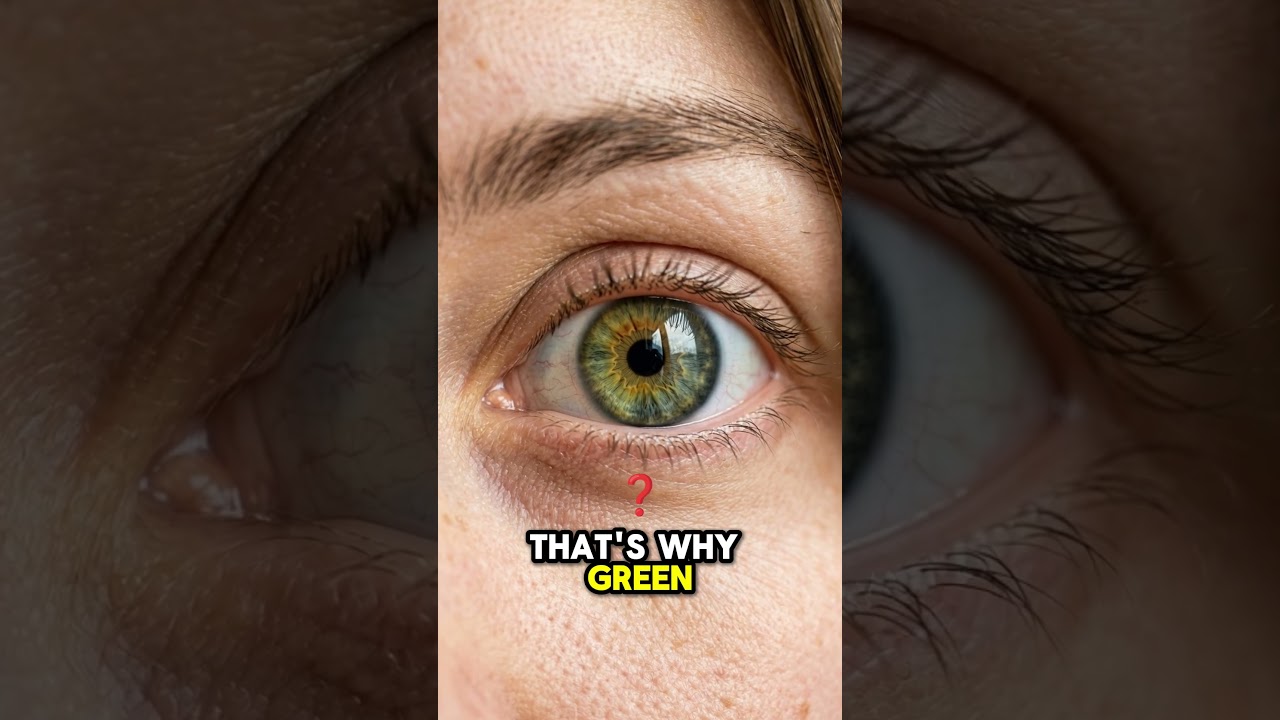
Indeed it did interest me.
Lorraine @EmeraldEyes - do you relate to this?
YouTube thought this might interest me …
Indeed it did interest me.
Lorraine @EmeraldEyes - do you relate to this?
I can relate. But apparently that is not actually Brian Cox speaking anyway. It’s just an AI mimicking his voice to give the video some validation. Besides, Brian Cox is an astrophysicist, not an opthamologist. I have seen another one going around where it’s talking about blue eyes, might even have been on here, I just can’t remember.
Lorraine
Yes, I’m afraid there are far too many AI videos on social media - I only use YouTube but I have seen so many. You just don’t know what to believe or who / what you can trust these days.
Very sad, so sad!
Takes care 

Hopefully, it will encourage more skeptical inquiry, critical thinking and intuition but having said that, these YouTube AI content channels are a step up from the awful computer generated voice ones. If the information is sound, I’m okay with it.
My problem Rupert, is knowing if it is sound. For example, whilst we know it’s not Dr. Brain Cox saying the stuff about green eyes, how do I know the information is actually sound?
This for me is the difficulty.
I think that’s the issue for most of us. I’m only learning the little nuances in AI productions from my family, but we all still get caught from to time.
Lorraine
Research. By default, the voice being Brian Cox means little apart from his reputation as a physicist but I’m always ready to be skeptical even of the experts. Take Abraham Loeb for example, a networking and vocal online physicist who constantly proposes that asteroids and comets are alien technology drifting through space, while it is speculation, he sells the ideas to influencers and sells his books and monetises his channels. Many people take him on his word because he is a Harvard professor. I think it is healthy we look into things deeply and try and separate the wheat from the chaff. Sometimes the collective can get it wrong and sometimes only just one individual.
Funny you should bring this up as I just finished watching a video by Dr Sarah Brewer. I stumbled on the video by accident as I was reading an article about a quote by Paul McCartney  but you know how these websites work. Her bio reads …
“Dr Sarah Brewer is an award-winning health journalist, medical nutritionist and author of over 70 popular health books. She earned her medical degree from the University of Cambridge in 1984, where she was one of the first women in her college.”
The video was about the benefits of olive oil of all things. I agreed with the general gist of what she was saying but took much of the hyperbole with a grain of salt and at the end of the video? She was promoting and selling her £49 a bottle olive oil. Who would have guessed .
Clickbait on YouTube doesn’t need to be misinformation, it can be well established science or whatnot that is interesting enough for people to want to click and watch, thus monetising the channel. However, it also works in reverse where misinformation is used for exactly the same purpose. But it is no different from printed resources in the past by experts misleading readers, or experts writing columns in magazines or papers and spreading disinformation. We would have to apply the same critical thinking to those mediums as well.
On a broadcast level, let’s not forget the classic Swiss Spaghetti Harvest by Panorama in the 1950s which had viewers telephoning the BBC asking how they could grow their own spaghetti trees.
I feel the real challenge with AI is not with the producers of the content but how the audience needs to challenge their thought processes about what they choose to view. Good exercise for the brain no less. 
Addendum: I forgot to comment on the content of the presentation itself. I think it is fairly accurate as I am familiar with Rayleigh scattering from past documentaries I have watched on the brain and colour. Fascinating stuff because the concept blows my mind somewhat but I have consolidated what I think from also having looked into how bees, cats and dogs see. Just out of personal interest.
@ManjiB , @EmeraldEyes , I too found that odd. It’s curious he “talks” about green eyes when he normally talks about space a lot. It goes to show, beware of AI videos on Youtube.
You get an awful lot of them on the likes of Tiktok, which is fine for harmless humour. But for the rest, I certainly wouldn’t consider taking them at face value, certainly not for any of the miracle wonder products they advertise on their
Lorraine
Call me cynical if you wish (sometimes people, cruel and heartless people do!  ) but to me YouTube is a great source of music videos and cute animal ones but as means of obtaining authoritative information or news? Not so much!
I think most people are of the same opinion these. Some much can so easily be faked these. But it is great for music and humour as you say 
Lorraine
I’m okay with general knowledge being created and shared with AI, where it crosses the line with me is when it starts creeping into politics and social science. Disinformation spread in these areas can cause harm and divide people.
@peter25 , I agree. It saddens me many, many users use it for the news instead of Sky News, BBC News, ITN etc. No wonder there is a lot of cynicism. Especially when some prefer to listen to “Fake news” Trump. A lot of people take his word as gospel. It’s better for cute animal videos and suchlike.