Relying on a walking stick

These are the ones I used because the slope is all the way down to the toes. Some only slope inward at the heal and the pictures the sellers use always seem to show the back view and flat from the top. So you can’t always tell if the raised edge goes all the down to the toe, which is what I needed.

It’s certainly cured the foot roll to the extent I only have it in one pair of trainers. And when I wear them for a couple hours, my foot aches next day along the outside of my foot. And I’ll still forget to take it out :laughing: Note to self: must put original sole back in.

It doesn’t cure the foot drop, but it’s certainly made it more controllable. Especially with things like balancing on my stroke leg, walking a straight line or even with sudden right turns to change direction or look over your shoulder. That’s usually where the foot roll catches you out and before you know it, you’re going over on your ankle or tripping yourself up. Crossing roads was always a big issue with that.

Lorraine

3 Likes

I look down all the time too. I think because i drag my leg I’m always looking out for trip hazards. I must practice looking up more.

I liked @caer_luel 's idea of trying on a piece of paper. Never thought of that. It’s amazing how the brain works isn’t it. Who’d have thought it would be so difficult.

Keep trying Janet you will conquer those kerbs.

3 Likes

On a similar line to @caer_luel 's brilliant idea with the paper. Why not try stepping forwards and back while watching tv. I always suggest tv for a reason, it’s to distract you enough from the exercise that its retraining your natural instinct and allowing it to kick in and take over eventually.

When I learning to walk again, I went from watching my feet and trip hazards, to concentrating on the path several yards ahead and anticipating trip hazards. To eventually looking to the other end of the road…and fighting with myself to not look down :laughing: The fight gave up as I progressed and I won :grin:

Lorraine
Going back to the stepping. Do it for at least half an hour…if you can. Put on a favourite program and get engrossed, just not so much that you stop what you’re doing :smile:
You can also do it for lifting your leg up at the knee, marching on the spot. And don’t stop until the program is over, so keep your favourite beverage beside you.

This is where scales such as numbers of repetitions, number of sets/minutes stints before moving on to the next exercise are just not enough. That’s not enough time for the brain instincts to set a rhythm for the body’s rhythm. And don’t be afraid to push yourself. If you were out on a walk you’d have to push yourself in order to get back home.

2 Likes

Where there’s a Will, there’s a Hay - our younger members might not get that, but I thought it’s worth a punt :laughing:

5 Likes

Brilliant - Mind over matter :slight_smile:

2 Likes

Haha we’ve been there and have settled in the same place… Though though it was more one of those wrist straps we had due our kids…
We can laugh now
Nicky

2 Likes

Hi
Absolutely. I was getting reasonable at using a stick to go ip with and can do that on the bottom srep going down. It’s one of my main goals for this year. It makes so many places inaccessible too.
Blessings of fortitude and tenacity

3 Likes

I know how you feel,I’m constantly exercising and thinking up new routines.
and I also think am I even improving,
ultimately, I suppose it depends on your current ability,and is that enough for you to live with, but I suppose the stinger you become.the more you have in reserve for the bad days when you are exhausted.

5 Likes

Hi Lorraine at the moment I have got to the point of being able to walk a few steps in just my socks but when I put my foot splint and trainers on then try my toes curl under after trying 1 step.
I had 2 mini strokes then a bad stroke 1 after the other in September my physio is due to stop coming at the end of April as he only comes for 6 months from the date I leave rehab.
My arm moves but my hand doesn’t.
I am due to have my second dose of botox tomorrow which has really helped.
I can walk with a small headed quad stick but when I try to go down a step in the garden with my splint and trainers on it’s hard.
I can put my foot down onto the lower level but not my good one holding the stick as I’m scared of falling.
I’m 6ft so it’s a long way to the floor can your advise me.
I do exercises like rocking from good leg to bad leg and back over and over every morning and night it’s just my confidence when wearing trainers I lack.
My balance is so good I can bend over and touch the floor without falling so I can’t understand why I can’t step down even using a stick?
I have no clue how to conquer it and my physio going soon is stressing me out too.
I can’t control my toes or fingers myself and it’s getting me down alot.
Hope you can help.

3 Likes

First of all, I’m not a physio or PT trainer, I’m just a soon to be 63yr old housewife, just telling what has worked for me :wink:

So wear your splint and trainers when you do this exercise!
Do you have stairs in your home?
If so and they are anything like mine then you’ll have both a banister and wall to stabilise yourself if needed.

Stand of the bottom step and step down on your stroke leg then reverse back up again on your good leg. And just keep on doing that until you feel the muscles burn down the back of your leg. Then you can switch legs and do the other side while that one recovers.
Whatever you do to one side of your body you should always do for the other to keep your body balance :wink:
If you don’t have stair, do you have a thick book or low, stable stepping stool you can set against a wall/counter to step off and on again?
Something like this one in the pic below would be ideal because there are 3 different levels of height to it that you can progress to.

Another thing you can try while doing this exercise, is holding your stick in your stroke hand . . . as though you are going to use it that hand. Even if it’s only to try and grasp it or put some of your weight on it if you can. That’s an exercise in itself for you firing up your arm and hand. And that’s something you should still be doing in everything you do. You try using your stroke hand a few times before you revert to your good hand. It’s the only way to retrain your brain, use it or lose it, as the saying goes.

Your problem is more than likely a lack of strength in your knees, thighs, butt. We’ve all had that problem after our strokes because we’ve sat an awful lot. That lack of use/immobility means muscle atrophy. We lose muscle strength. And I know the exercises my physio gave me after my stroke were no where near enough for what I needed. But I humoured her until I could until I could lose her and then I started the hard work :sweat_smile:

Sit to stand with an upright chair, only if you can’t do free standing squats. But do them enough times until you feel the muscles burning down the backs of your legs. When you feel that the backs of your knees, thighs and butt are on fire. Only then do you take a rest for
1 minute. Do 3 rounds a day (twice a day even) for a week and you will notice a difference.


Wall slides are another good leg strengthening one. And again, I tend to wait for the muscles to actually burn before I release.

That will build trust and confidence in your knees when stepping off stepping off pavements whilst out and about. Because your brain will realise they are now strong enough to hold you up.

The toe curling was an issue for me, also my foot roll over (risking a sprained or broken ankle) so had to walk very carefully.
I started using a slopped insole in my trainers and shoes and after 3 months or so I felt an almighty painful click in the sole of my foot. It scared the nappy off me :sweat_smile: But my toes stopped curling and the foot doesn’t role anymore, though I do still have foot drop.
But, for me, having that insole in stabilised my foot enormously for when out walking.

Ankle Flexibility (Dorsiflexion) This was one useful exercise my physio had me doing for my stroke foot.

And back leg stretch is always good after those exercises above


And while you’ve go your hands against the wall like that, use your fingertips instead of your whole hand flat. I do wall push-ups that way and my fingers always feel so good afterwards, particularly my arthritic thumbs.

2 Likes

Thanks for the advice.
I don’t think I would be able to use the insoles as well as my splint.
My physio told me that wearing the splint will train my brain to stop turning my foot sideways and my toes turning under.
I do stand ups and moving my weight forward onto bad foot then back onto good foot.
I also stand without holding on to anything for 10 minutes can I get that step from amazon?

2 Likes

Yes, you can get the step from Amazon and prices range from about £15 up.

That would be ideal for you.
Start off with the lowest step, stand on it and lower your stroke foot the floor and come straight back up again…without actually stepping off. That will strengthen your knees.

Do a round with each leg and don’t stop until you feel the muscles burn in the bent leg. Then switch sides while that one recovers.
As that step gets easier, raise it to the next level. The burn can kick in earlier with each round so consecutive rounds are going to get shorter in completion.

To combat the boredom or monotony of doing them you could put on some music with a beat you can step to, or watch tv while you step :slightly_smiling_face:

Going by what you said about only standing for 10 minutes. Allow yourself an hour after these exercises to recover from the mental as well as physical fatigue.

Be aware that if you do work to the point of muscular burn, then the muscles are going to feel sore and stiff for a few days after. That is always a good sign that you’ve done enough and are doing them right :wink: But you should be able to work through that. And have a look on the internet for a few simple leg stretches to ease that stiffness.

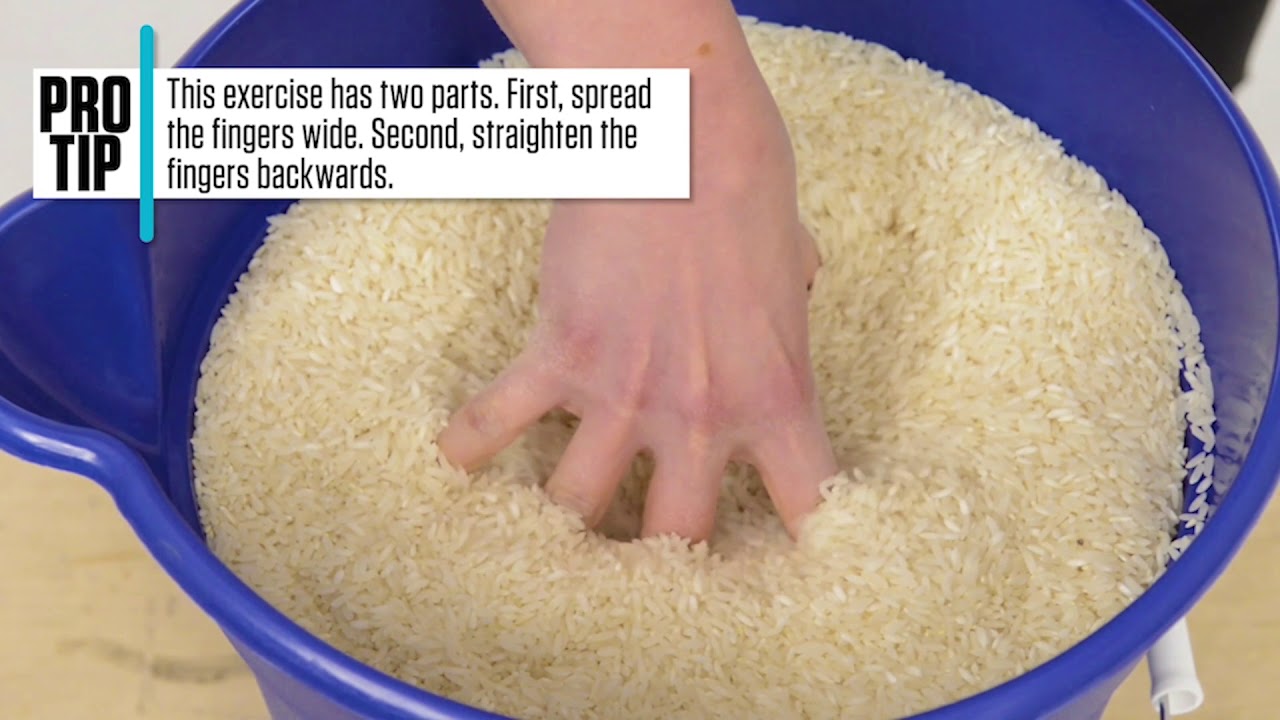
Rice Bucket Exercise, use for climbers is good for hand exercise

Also try Elyse Newland’s youtube channel. She has a whole range of videos for post stroke recovery, upper and lower body exercises, target areas such as weak arm or foot drop foreinstance.
https://www.youtube.com/@PostStrokeOrg/featured


Elyse Newland

Lorraine

2 Likes

Thanks for the advice.
I have found a occupational therapist online who has thousands of videos about everything to do with recovery and easy to follow too.
Everything from stretching and bending to exercises to get things moving , hand, leg , arm and toe’s.
I showed my physio and he said they will help.
I have been for my botox injections today they really have helped me get this far.
So it’s best to do standing and stand ups till the back of my leg’s hurt?
Thanks for the advice how far along are you with recovery?

3 Likes

Not hurt but burn, there is a difference and you’ll know it when you feel it :sweat_smile:

I’m 4 years post stroke now, back driving, going to the gym, strength & balance class and body balance class. All started in aid of my recovery and no intention of giving any of it up now. But I was where you are and I still have minor deficits. You will get there too, it just takes a lot of time, patience and hard work, but so worth the effort :smile:

Lorraine

3 Likes

Hi Lorraine 1 thing that have noticed is that my right eye won’t shut on it’s own unless I hold it.
Any ideas?
Hope your ok

2 Likes

I’m afraid I can’t be of much help there other than many of us do have weakness in facial and eyelid muscles after a stroke that corrects over time. For some, the milder strokes, it probably improves that bit earlier than others.

The only eye issue I had was delayed tracking. For instance, when I’d look down, the eyeball would follow along after the head had turned down. But that right itself over time in the first year post stroke.

Speak with your physio about it and they will probably give facial exercises for it. What you’re currently doing yourself, holding it closed will be one of the exercises, scrunching and stretching your facial muscles, particularly the affected side in an exaggerated wink and similar. They may be able also suggest some gently massaging technique it help with stimulating the nerves.

But do also speak with your GP or your local stroke team if you haven’t been signed off yet. At the very least, you will need eye drops or ointment to prevent the eyeball from drying out and causing irritation.

Have your ordered your step yet :wink:
Also

Looking back on one of your posts I came across this one :point_up_2:
I was 58 when I had my stroke, a mini stroke. Couldn’t walk, I cruised the furniture like a baby learning to walk, the hospital didn’t give me an walking aids. I couldn’t talk (aphasia), couldn’t use my arm or hold a cup, balance shot, cognition was shot, eyes delayed response in track, horrendous fatigue etc, etc, etc.
I’m just over 4yrs post stroke and coming up to my 63rd birthday. I walking hands free but do still have foot drop. I can talk although I still have a touch of aphasia, eyes are normal now, cognition is good, I’ve learned how to pace myself so I don’t get fatigued, I drive, I go to the gym and various other fitness classes 4/5 times a week and live a reasonably good life now. My stroke is my hobby now and I’m still making improvements :smile:

Believe me, there is plenty hope for you yet :wink: Yes, progress slows after the first 6 months, it can come in small increment’s in some areas or can just suddenly switch back on in others, such as it did with cognition for me. Other times it can be 2 steps forwards 1 step back, but it doesn’t stop progressing. But you only get out what you’re prepared to put in, use it or lose it. And never give up.

So if you can get yourself to a gym or any fitness classes for the over 50’s in your area, I highly recommend them, they’re excellent. motivators when you see the progress you make, they encourage and cajole you. I go to a strength & balance class run by Age UK which started out as solely chair based exercise which suited me at the time with my balance issue, but now I’m free standing in their circuit training class (which is actually called Stronger for Longer). There might be something similar in your area. Rehabbing at home can only do so much, monotony and boredom can hinder progress, variety stimulates progress.

Lorraine

2 Likes

Ask for more physio sessions, I’m in Aberdeen, and I was originally given six weeks of home physio, but since then I’ve been going to an outpatient service, they seem happy for me to continue as long as I’m improving and doing exercises at home

1 Like

Not available here I’ve been left to do my own thing

1 Like

I echo your sentiments Bobbi I’m accustomed to a few tumbles mainly backwards, I attempt to slow the fall by sitting down thus making the distance to the ground more manageable.

1 Like